
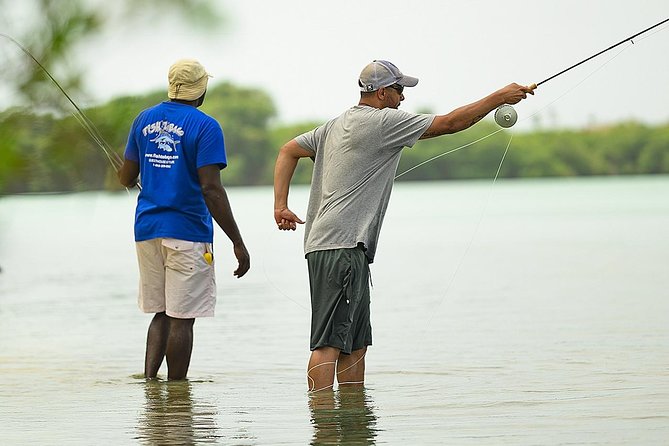
Reviewed · TOBAGO TOURS
Fly Fishing Tour
Tobago gives saltwater fly fishing a lively twist: you may cast to bonefish on the flats, watch permit near a reef break, or stalk tarpon around mangroves. The fish list also includes snook, palometo, bar jacks, tuna, barracuda, amberjack, and dorado.
I like the personal guiding from Captain Bruce and Brandon, plus the choice of fishing areas. I also like the practical touches: drinking water is provided, and the boat can shift from flats to lagoon fishing when wind makes one spot difficult.
The main drawback is time. At about three and a half hours, this is a focused outing rather than a full-day charter. Fishing depends on conditions, and the strict no-refund policy makes it wise to check your plans before booking.
Key points at a glance
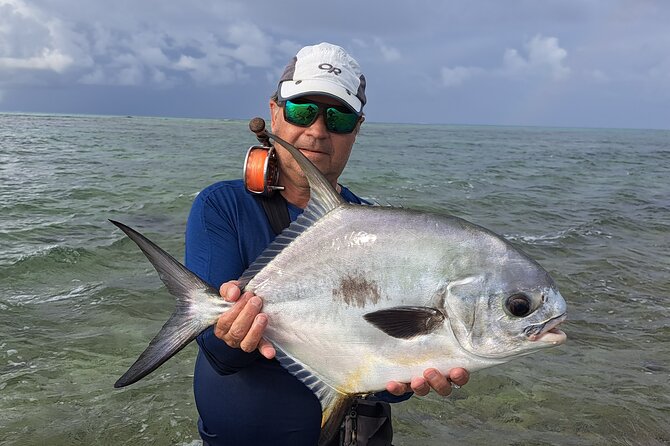
- Cast for permit near Buccoo Point: Reef-break fishing can put large permit close to shore, making for a thrilling sight-casting chance.
- Look for schools of bonefish: Tobago’s flats can hold impressive numbers, though getting them to eat may take patience.
- Use the lagoon when wind rises: The guide may shift locations so you can keep fishing instead of losing the session to rough flats.
- Fish with a private group: Only your party takes part, which gives the guide room to adjust the outing to your ability and target species.
- Expect more than one kind of catch: Fly catches have included bonefish, permit, tuna, tarpon, and other saltwater fish.
- Start early or fish late: Available sessions run from 6:00 to 10:00 in the morning and 2:00 to 6:00 in the afternoon, Monday through Friday.
Buccoo Point is the launch for a varied saltwater session
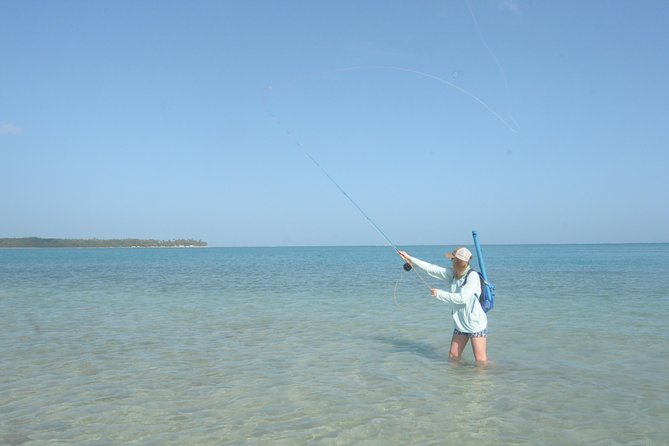
You meet at the Fish Tobago Tours fly fishing charter point at the Buccoo Integrated Facility in Buccoo Point. The activity ends back at the same meeting point, keeping the day simple. The listed ticket redemption point is Buccoo Reef, so check your confirmation for the exact arrival instructions.
Buccoo Point is useful because the fishing can cover several types of water in one short trip. The area gives access to reef edges, flats, lagoon water, and nearby mangrove settings. That variety matters in saltwater fly fishing, where wind, tide, light, and fish behavior can change the best plan quickly.
You are not signing up for a fixed sightseeing route. The stop is essentially a fishing base, and your guide decides where the best chance lies during your time. That makes the trip more flexible than a standard boat ride, but it also means you should arrive ready for a session shaped by conditions rather than a guaranteed species.
The meeting point is near public transportation, and pickup is offered. Since the supplied details do not explain the pickup area or extra cost, confirm those points when you book. If you make your own way there, allow time to find the Buccoo Point facility and get settled before departure.
A few more Tobago trips to weigh up
- Fun Fishing Tour (Snacks & Light Refreshments Offered)
★ 5.0 · 26 reviews - Deep Sea Fishing (Street Food and Beer Included)
★ 5.0 · 5 reviews
What three and a half hours can cover
The advertised duration is approximately 3 hours and 30 minutes. That is enough time for a serious introduction to Tobago saltwater fly fishing, but not enough to cover every fishing ground or wait endlessly for a single permit.
A typical session may involve moving between productive water and making repeated casts from the boat. You could spend part of the time on flats for bonefish, then switch to a lagoon if wind affects visibility. Other possibilities include tarpon around mangroves or reef-edge shots at permit.
The guide may also work with baitfish for larger species such as mahi, wahoo, and barracuda, based on the conditions and the fishing style chosen. The available fishing is not limited to one tidy category. You can focus on fly casting, but the broader charter experience has also produced amberjack, yellowtail, red snapper, trevally, tuna, and dorado.
That variety is one of the trip’s best features. If your first target refuses the fly, you may still have another option. The tradeoff is that a short trip requires sensible expectations. You might catch several fish, as one outing produced four bonefish and a permit, or you might spend time presenting flies to fish that are difficult to persuade.
Bonefish on the flats, permit by the reef
Bonefish are among the most practical targets here. The flats can hold large schools, giving you more chances to spot fish and make a cast. That does not make them automatic. One account describes fish that were hard to feed at first before eventually producing four bonefish and one permit.
For a fly fisher, that is the right kind of challenge. You are not simply dropping a line and waiting. You need to place the fly well, respond to moving fish, and stay patient when a school refuses the offering. If you are new to saltwater fly fishing, the guide’s help with location and tactics will be especially important.
Permit provide a different kind of excitement. They have been found just feet away in the wash of a reef break, which can create a close, visual target. The chance to cast at permit from a boat near Buccoo’s reef edge is a strong reason for experienced anglers to consider this trip.
Still, permit are not a promise. The same is true of bonefish, tarpon, and every other species listed. Fish behavior, conditions, and your casting all matter. The honest way to book this is to see the trip as a chance to pursue several prized species, not as a guaranteed catch of a named fish.
Tarpon, tuna, and the larger surprises
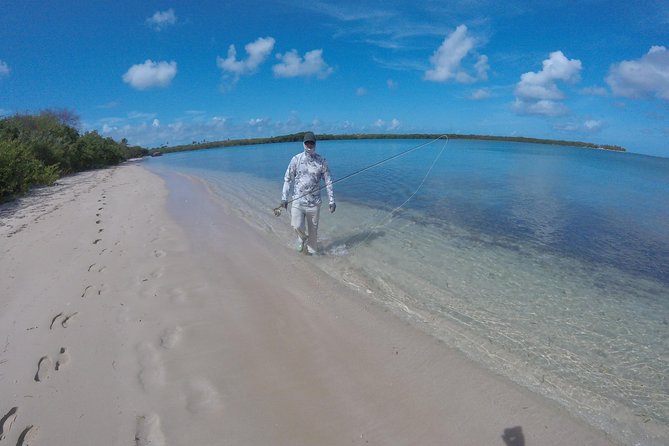
Tobago’s fly fishing can turn dramatic very quickly. A tarpon has been caught and released close to shore, launching out of the water while hooked. That kind of short-range action is a memorable possibility, especially if you want more than quiet flats fishing.
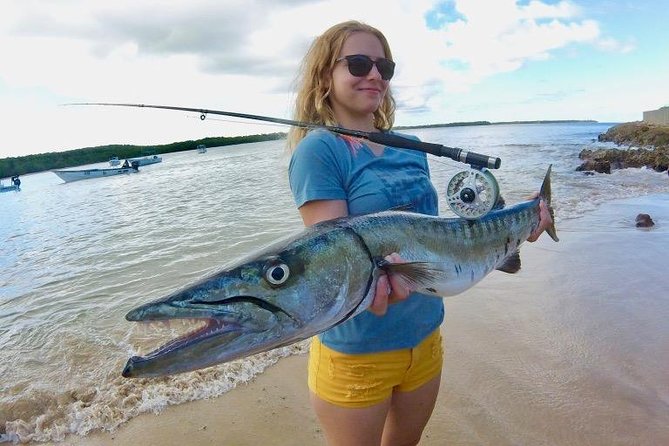
Tuna have also been caught on fly rods, while the charter may target amberjack, barracuda, and other powerful saltwater fish. The guide’s approach can shift from sight casting to working areas where larger fish are active. You should ask at booking what species are most realistic for your date and preferred tackle.
Brandon has guided trips producing dorado, permit, trevally, yellowtail, red snapper, and barracuda, in addition to bonefish. Captain Bruce has also guided successful fishing for tuna and larger reef fish. These results show the range of the water around Tobago, but they should not be read as a standard catch list for every three-hour outing.
If you mainly want bonefish and permit, say so clearly. If you would rather chase larger fish, mention that too. A private boat gives the guide more room to shape the plan around your priorities than a shared charter would.
Same two islands, a completely different day out:
- The Grand Circle 12-Hour All-Inclusive Island Experience
★ 5.0 · 341 reviews - Buccoo Reef and Nylon Pool Adventure
★ 5.0 · 158 reviews - Birdwatching, Waterfall, Rainforest and Island Nature Tours
★ 5.0 · 70 reviews - Tobago Buccoo Reef Glass Bottom Boat Tour
★ 4.0 · 68 reviews
Guides who keep the plan flexible
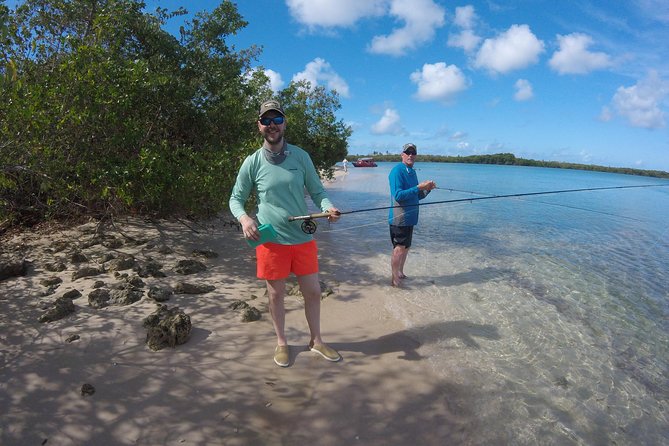
The named guides are Captain Bruce and Brandon. Both are described as putting strong effort into locating fish and adjusting tactics. That is crucial in Tobago, where one water type may be fishable while another becomes difficult because of wind.
Brandon is particularly associated with knowing where to find permit, tarpon, and bonefish and with explaining local tactics. Captain Bruce is linked with productive boat trips for tuna, amberjack, barracuda, and bonefish. The trip may therefore suit you best if you value a guide who actively searches rather than simply taking you to one fixed mark.
The private format adds value here. Your group is the only group participating, so you are not sharing limited casting opportunities with strangers. That matters when fishing from a boat, where a good angle can disappear quickly and different skill levels can affect the pace.
The listing does not state the boat’s size, the number of rods, or the experience level required. Ask about equipment and casting support if you are traveling without your own fly gear. Most people can participate, but successful saltwater fly casting still requires some patience and coordination.
Wind, lagoon water, and the value of a backup plan
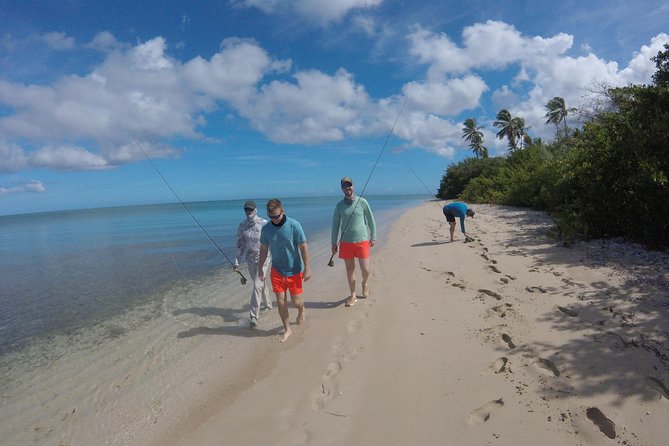
Wind is a major practical concern in fly fishing. It can spoil long casts, flatten visibility, and make a shallow flat less useful. The good news here is that the guide can use lagoon water when the flats are too windy, keeping the session productive instead of ending the fishing plan early.
That flexibility may matter more than a long species list. A perfect flat in poor wind is not much use if you cannot see or present a fly. A lagoon can offer a different setting and a better chance at fish such as tarpon or snook, depending on conditions.
You may also fish around mangroves, reef edges, and open water. Each setting calls for a different approach. Mangrove tarpon can demand quick reactions. Flats bonefish call for careful presentation. Reef-break permit ask for accuracy and patience. The variety keeps a short trip from feeling repetitive.
The limitation is that you cannot control the day’s conditions. If you are booking specifically for a permit shot or a tarpon jump, keep your expectations realistic. The guide can improve your odds, but cannot order fish to eat.
Drinks, fruit, and a boat built for fishing
Hot-weather fishing is tiring, and water on the boat is a welcome detail. Fresh fruit may also be available if you would like it. Those are small touches, but they matter during a concentrated session when you are standing, casting, watching, and reacting for several hours.
The boat has been described as comfortable for fly fishing and suitable for working the waters around Tobago. The supplied information does not give its exact specifications, so ask about shade, storage, safety equipment, and rod setup if those details affect your choice.
Do not treat the drinks as a substitute for preparation. Bring anything else you personally need for the outing, but confirm what is permitted and supplied. The available information supports water and fruit, not a full meal or a particular set of fishing equipment.
The best part of the boat setup is access. You can work different fishing zones rather than being tied to one beach position. That mobility is especially useful when fish are present in one area but conditions change in another.
Is $360 a fair price?
At $360 per person, this is not a budget fishing add-on. The value comes from the private format, a dedicated guide, a boat, and access to several types of saltwater fishing in one session. If you are serious about fly fishing, those factors can justify the cost more easily than a simple group excursion.
The duration makes the calculation more important. You are paying for about three and a half hours, not a full day. That can be a good fit if you have limited time in Tobago or want to add one focused fishing session to a larger holiday. It may feel expensive if your main goal is a long day on the water.
A private charter also means the price is tied to your group rather than a shared experience, but the supplied details state the rate per person. Confirm the final total for your party before booking, including any pickup arrangements or equipment needs.
The strongest value comes if you care about the experience of hunting fish, not just the number caught. A bonefish school, a permit near the reef wash, or a tarpon launching close to shore can make a short session worthwhile even when the fish are selective.
Timing, pickup, and the firm cancellation rule
Sessions are listed Monday through Friday, from 6:00 to 10:00 in the morning and from 2:00 to 6:00 in the afternoon. The early slot gives you a cooler start, while the afternoon option may suit a day when you prefer to fish later. The exact activity duration is still approximately three and a half hours within those windows.
Pickup is offered, and the meeting point is at Buccoo Point. Because the details do not specify the pickup zone, ask before you rely on hotel transportation. The activity returns to the meeting point at the end.
Booking confirmation is provided at the time of booking. Most people can participate, and the activity is near public transportation. It is private, with only your group taking part.
The cancellation policy is strict: the experience is non-refundable and cannot be changed for any reason. I would only reserve this after confirming your schedule, transportation, and preferred fishing time. This is particularly important if your holiday plans may shift.
Who will enjoy this Tobago fishing trip most?
You should consider it if you already fly fish and want a new saltwater setting with several possible targets. Bonefish, permit, tarpon, and tuna give experienced anglers plenty to pursue, while the guide’s local direction can help you make better use of limited time.
It can also work for a couple or small private group that wants a personal outing rather than a shared boat. One couple used the trip for a day on the water, and one angler returned for another session with Captain Bruce. That repeat format makes sense if fishing is a central part of your Tobago visit.
You may want to think twice if you need a guaranteed catch, a full-day charter, or a firm target species. Fish can be selective, wind can change the plan, and the booking cannot be refunded or amended.
Should you book Fish Tobago Tours?
Book this trip if saltwater fly fishing is a main reason you are visiting Tobago. The mix of flats, reef edges, lagoons, mangroves, and open-water possibilities gives you a real chance at bonefish, permit, tarpon, tuna, and other strong fish in a compact private outing.
I would ask about your target species, equipment, pickup details, and likely conditions before paying. If you can accept that fishing is uncertain and three and a half hours is a focused session, the $360 price can make sense for the access and personal guiding. If you want a relaxed boat ride with a guaranteed catch, choose something less specialized.
FAQ
Where does the fly fishing tour start?
The tour starts at Fish Tobago Tours Fly Fishing Charters Fishing Trips #2, Buccoo Integrated Facility, Buccoo Point, Trinidad and Tobago.
Where does the activity end?
The activity ends back at the meeting point.
How long does the tour last?
The tour lasts approximately 3 hours and 30 minutes.
What fishing times are available?
Available hours are Monday through Friday, from 6:00 AM to 10:00 AM and from 2:00 PM to 6:00 PM.
Is pickup available?
Yes, pickup is offered. The supplied details do not specify the pickup area or any additional cost, so confirm those details when booking.
Is this a private fishing tour?
Yes. Only your group will participate.
What fish might I catch?
Common targets include bonefish, permit, palometo, snook, tarpon, and bar jacks. Fishing trips have also produced tuna, barracuda, amberjack, dorado, trevally, yellowtail, and red snapper.
Can I cancel or change the booking?
No. The experience is non-refundable and cannot be changed for any reason.
Just added around Tobago
- Castara Bay Day Trip with Lunch★ 5.0 · 3 reviews
- Full Day Group Tour in Tobago Atlantic Coast★ 3.0 · 3 reviews
- Partlatuvier Bay Day Trip with Lunch★ 4.5 · 3 reviews
- Blue Mango Hole (Healing Hole)★ 5.0 · 3 reviews
- Englishman’s Bay Day Trip with Lunch★ 3.5 · 3 reviews
- Turtle Watching★ 3.5 · 3 reviews
- 2 Hours Trekking Waterfall Tour in Tobago★ 5.0 · 3 reviews
- Tobago: Buccoo Reef Marine Park Glass Bottom Boat Tour★ 3.1 · 3 reviews
Tobago Tours, compared.
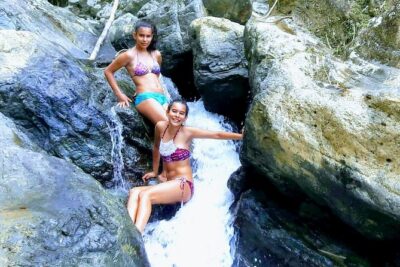
The Grand Circle 12-Hour All-Inclusive Island Experience
Read our review →
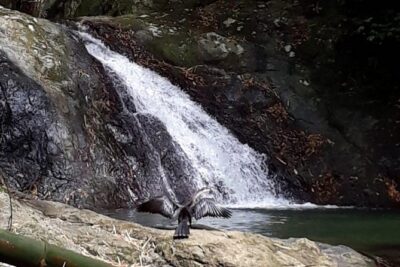
Birdwatching, Waterfall, Rainforest and Island Nature Tours
Read our review →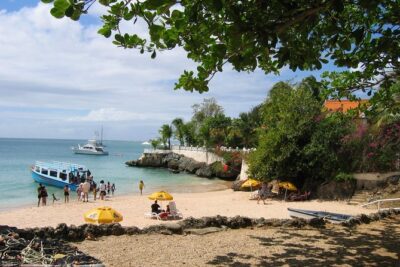
Tobago Buccoo Reef Glass Bottom Boat Cruise and Island Sightseeing Tour
Read our review →
Browse the lists this tour appears in