
Reviewed · TRINIDAD TOURS
Steel Pan Class
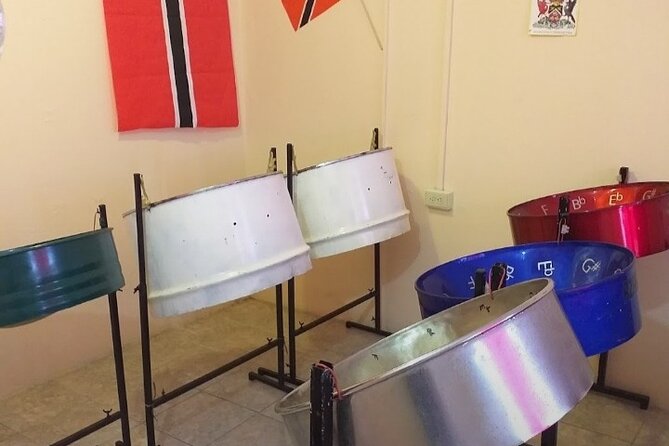
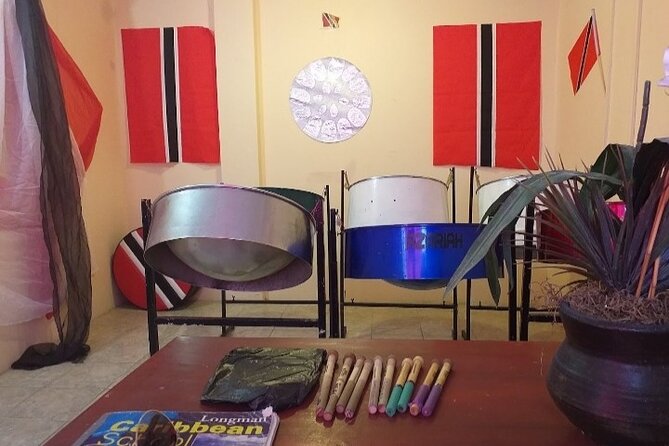
The best part of this Trinidad experience is that you do not just watch the steel pan being played. You get a pair of sticks and make the instrument speak yourself. Ms. Ash starts with the pan’s story, then gets you playing a major scale and a song during the 90-minute class. No musical background is needed.
I like the private format, since your group gets the instructor’s attention rather than being lost in a large classroom. I also like the video keepsake, which can be sent by WhatsApp or email. The main caution is pickup reliability: one booking ended with a long wait and no driver, so confirm the meeting details before setting out.
Key points at a glance
- A real hands-on lesson: You play the steel pan yourself instead of simply watching a demonstration.
- A useful beginner format: The class teaches a major scale and one song, with no previous musical training required.
- A personal setting: This is a private activity for your group only.
- Local voices add character: Ms. Ash leads the class, while driver Anton has been praised for his humor and charm. Her father may also be around to offer extra local guidance.
- A video to take home: Your playing can be recorded and sent by WhatsApp or email.
- Allow time for pickup: Transportation is offered, but one reported missed pickup makes reconfirming the arrangements a sensible step.
Why a steel pan lesson belongs on your Trinidad plan
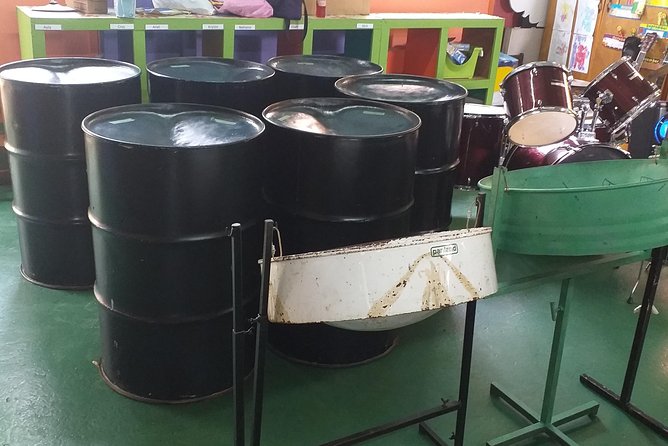
Trinidad’s steel pan is not a souvenir prop or a passive cultural display. It is an instrument you can actually try, and this class gives you that chance without requiring music lessons beforehand.
The experience begins with an explanation of the steel pan’s history and Trinidad’s role in its development. That introduction matters because the instrument can look simple at first glance. A round metal pan and a pair of sticks do not tell you much about the skill involved. Once you begin, you quickly see that each note has a precise place and that your hands need to learn where to strike.
I like this approach because the cultural context comes before the practical lesson, but it does not swallow the whole class. You hear the background, then move straight into playing. For a short activity, that is the right balance.
The class welcomes adults and children with little or no experience, as well as skilled musicians. That makes it a good choice for a mixed family group. A child can take part alongside a parent, while an experienced player has enough musical understanding to appreciate the instrument’s layout and technique.
A few more Trinidad trips to weigh up
- Authentic Trinidadian Cooking Class in Port of Spain
★ 5.0 · 3 reviews - Stand Up Paddle Lessons
★ 5.0 · 37 reviews
The first lesson: understanding the pan before playing
Expect the opening part of the session to focus on the steel pan and its place in Trinidad. The exact length of the history talk is not specified, but the purpose is clear: you learn what you are playing before picking up the sticks.
That small amount of context helps you approach the instrument with more respect. You are not simply making random sounds from a metal surface. You are learning an instrument closely tied to Trinidadian identity and musical culture.
Ms. Ash leads the instruction. The personal accounts supplied for this experience describe her as patient, talented, humorous, and charming. Those qualities matter in a beginner class. When your first notes sound uneven, a calm teacher makes it easier to keep trying rather than freeze up.
The class is private, so only your group participates. I would consider that a major benefit for families and first-time players. You can ask basic questions without feeling self-conscious, and the pace can suit the people in your group more easily than a public class would.
Learning a major scale in 90 minutes
After the introduction, you begin learning a major scale. This is a sensible first step because it teaches you the basic note pattern before you attempt a full tune.
You should not expect to become a polished pan player in an hour and a half. The value is elsewhere. You get a clear introduction to how the instrument is arranged, how to hold and use the sticks, and how separate notes combine into music.
The scale also gives you a small success early in the class. You can hear progress one note at a time. That helps children stay interested and gives adults a simple structure to follow.
I would pay attention to the instructor’s demonstration and resist the urge to hit the pan too hard. The goal is control, not volume. The information provided does not specify the exact teaching method or equipment setup, so you should treat this as a guided introduction rather than a formal music course.
If someone in your group already plays an instrument, they may pick up the scale more quickly. Still, the class is not limited to musicians. The design specifically allows beginners to participate, and the private format should help the instructor give extra help when needed.
Choosing a song from the available selection
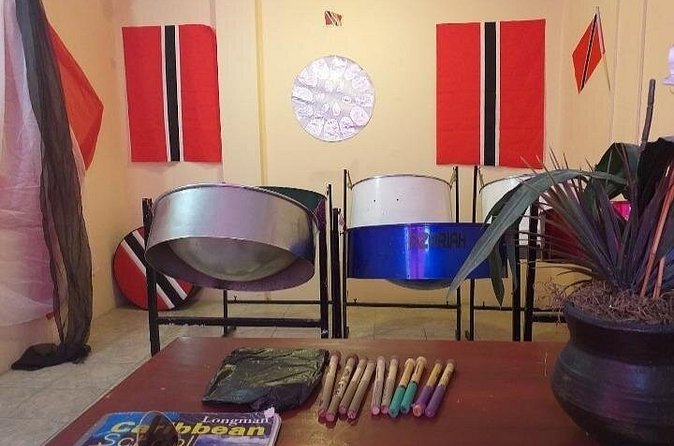
Once you have worked through the scale, you learn one song from the available selection. You can choose the song, though the exact list is not provided in advance.
That choice gives the class a personal finish. A scale is useful, but a recognizable tune is what makes the experience feel complete. You leave knowing that you played a piece of music, not just a series of notes.
I would ask about the song choices at the start of the class. Since the available selection is described only as a stack of songs, the exact options may affect what you choose. If you are booking for children, let them have a say. A familiar song can make the lesson more engaging.
The song portion also helps you understand the difference between knowing where notes are and playing them in sequence. You may find that the simplest tune requires more concentration than expected. That is part of the fun, and it gives you a better sense of what skilled steel pan players do.
The class is short enough that you should keep your expectations realistic. You will learn a scale and a song during the period. You are not signing up for a multi-day training program, a concert performance, or an advanced workshop.
Same two islands, a completely different day out:
- Trinidad Nighttime Food Tour
★ 5.0 · 123 reviews - Trinidad Highlights and Scenic Drive Tour
★ 4.5 · 68 reviews - Trinidad Highlights Tour from Port of Spain
★ 4.5 · 61 reviews - Mini Island Tour of Trinidad
★ 4.5 · 47 reviews
Meeting Ms. Ash, Anton, and the local family connection
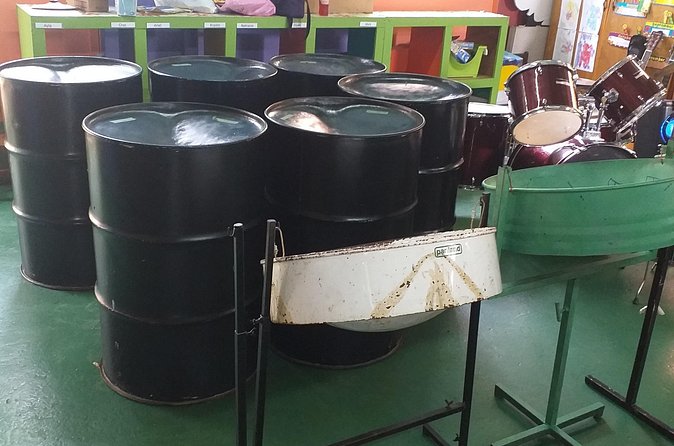
The instructor, Ms. Ash, is the central personality of the class. The strongest praise focuses on her patience, humor, charm, and musical ability. Those traits are especially valuable here because the class depends on direct instruction rather than sightseeing commentary.
Driver Anton may handle the pickup. He has also been described as humorous and charming, which can make the transportation part feel like an extension of the local experience instead of a simple transfer.
There is also a chance you may meet Ms. Ash’s father. He has been described as an added bonus and a guide outside the class. This is not guaranteed, so do not book the experience expecting a second guide, but it can add a friendly family connection to the visit.
That personal element is one reason this activity feels different from a standard museum stop. You are spending time with people connected to the experience, not only reading information on a display. At the same time, the class is still structured enough to give you a clear musical goal.
The private setting works well for families
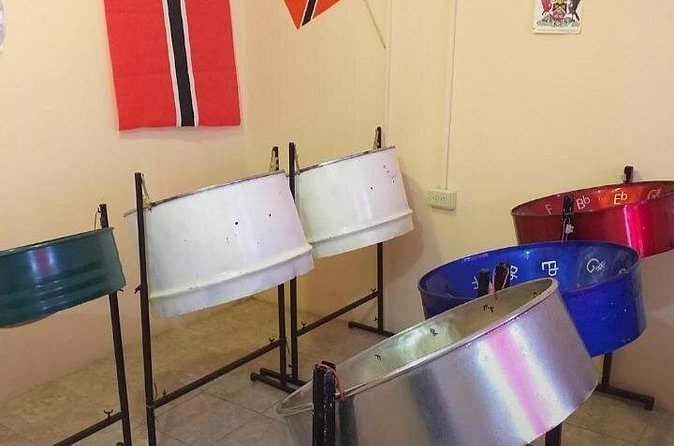
Only your group takes part, which changes the tone of the lesson. You do not need to compare your playing with strangers, and the instructor can focus on the age and ability levels in your party.
For a family, this is useful in several ways. Children can participate without needing to meet a strict skill standard. Adults can try the instrument even if they have never read music. Experienced musicians can ask more technical questions or move through the basic material quickly.
The class also works for couples, friends, and small private groups who want a cultural activity with active participation. It is less suitable if you want a long performance, a large ensemble session, or a broad tour of Trinidad’s music scene. The supplied details describe one private class, not a wider concert or neighborhood tour.
The 90-minute length is another advantage. It is long enough to cover the history, scale, and song, but short enough to fit beside other plans in Trinidad. You will want to arrive ready to focus, since there is not much spare time for delays inside the lesson.
What the video adds to the experience
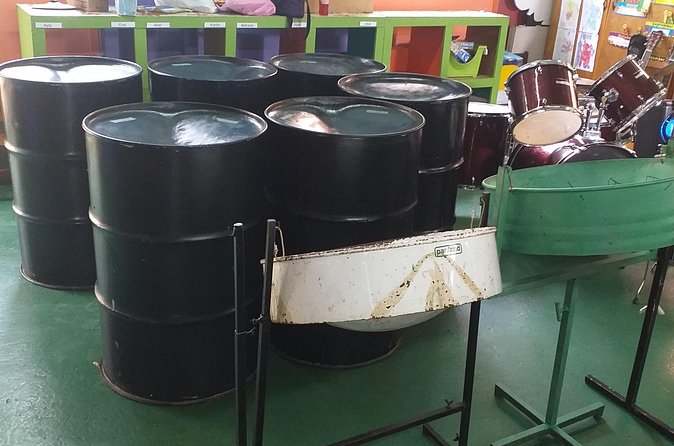
A video will be made and sent to you by WhatsApp or email. That is a useful touch, especially if you are taking the class as a family.
The recording gives you something more lasting than a quick photo beside an instrument. You can remember the song you worked on and share the moment with people who were not there. For children, it can be a fun record of trying something new.
The details do not specify whether the entire lesson or only part of the song is recorded. I would confirm how the video is handled and make sure the provider has the correct WhatsApp number or email address before leaving.
Do not treat the video as a professional music recording. Its value is personal. It captures your group making its first attempt, which is exactly what makes it worth keeping.
Pickup, transport, and the one serious warning
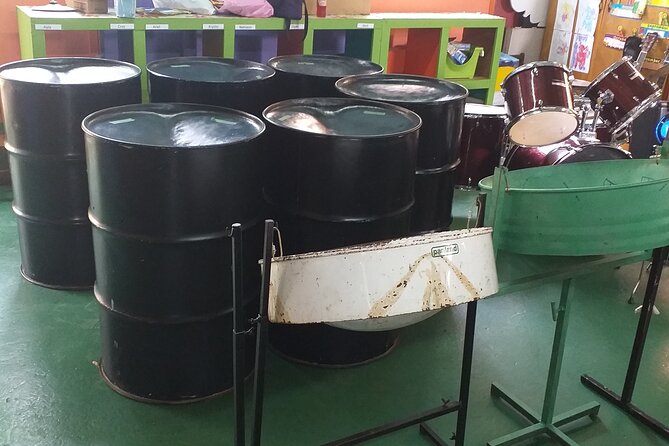
Pickup is offered, and the activity is near public transportation. That gives you two possible ways to reach the class, but the transport details are important because the information does not identify the pickup locations, schedule, or public transit routes.
One poor experience involved a paid car ride to the pickup location, followed by a wait of almost an hour with no driver arriving. The booking company later offered a refund, but did not provide the desired notification or immediate solution. That is a serious service problem, especially when you have paid separately to reach a meeting point.
I would confirm the pickup time, exact location, driver contact details, and backup plan before the day of the class. If you are arranging your own taxi, do not send the vehicle away until you are sure the pickup has been confirmed. If public transportation is practical for you, ask for clear directions rather than relying only on the pickup option.
This concern does not erase the strong teaching experience described elsewhere, but it does affect the practical value. A memorable class is not much help if you cannot reach it. Build a little flexibility into your schedule, especially if you have a cruise departure, airport transfer, or fixed dinner reservation afterward.
Is $100 per person good value?
At $100 per person, this is not the cheapest cultural activity you will find in Trinidad. The price needs to cover more than a short demonstration. You are paying for a private class, an instructor’s time, transportation if arranged, access to the instrument, the lesson itself, and a video keepsake.
The private format is the key value point. If you are booking for a family or a small group, the cost may feel more reasonable because everyone receives the same hands-on experience. You are also avoiding the passive format of watching a performance and leaving without trying anything.
The value is weaker if you mainly want to hear professional steel pan music. In that case, a performance could give you more music for less money, though no performance would provide the same chance to play the instrument yourself.
I would also factor in transport costs. If you need to pay for a separate car to reach an uncertain pickup location, the total price rises. Clear confirmation from the provider can protect the value of the booking.
The overall score is 4.2 out of 5 from five ratings. That is encouraging, but the sample is small, and the scores show a sharp split between excellent personal instruction and one major pickup failure. I would read that as a reason to book with practical care, not as proof that every departure will be problematic.
Who will enjoy this most?
I would recommend the class most strongly to:
- Families looking for an activity children and adults can share
- First-time musicians who want a low-pressure introduction
- Visitors who prefer active cultural experiences to passive sightseeing
- Small private groups who value personal attention
- Music lovers who want to understand the steel pan by playing it
You may want to skip it if you have very little schedule flexibility, dislike hands-on lessons, or want a full concert rather than instruction. It is also not the right choice if your priority is advanced musical training. The class teaches one major scale and one song in about 90 minutes, so it is an introduction with a clear finish.
Booking and cancellation advice
Confirmation is received at the time of booking. Free cancellation is available if you cancel at least 24 hours before the local start time.
Changes or cancellations made less than 24 hours before the experience are not accepted for a refund. The activity also depends on good weather and a minimum number of participants. If poor weather or an insufficient number of participants causes cancellation, you will be offered another date or experience, or a full refund.
Because pickup has caused trouble for at least one booking, I would contact the provider before the cancellation deadline if any transport detail is unclear. That gives you time to fix the arrangements or cancel without losing the full amount.
Should you book the Steel Pan Class?
Book it if you want to do something distinctly Trinidadian, meet local instructors, and make music with your own hands. The class offers a strong mix of cultural context, simple musical goals, private teaching, and a video to take home.
I especially like it for families and beginners. Ms. Ash’s patient teaching and the possible involvement of Anton or her father can make the experience feel personal rather than packaged. Just confirm the pickup carefully and leave room in your schedule for transport uncertainty.
If you can accept that this is a short introduction, not a full music course, the $100 price can be fair for a private lesson with a keepsake recording. If reliable transportation is your top concern, ask precise questions before booking. For the right visitor, this is a memorable way to hear Trinidad’s steel pan by making its first notes yourself.
FAQ
How long does the Steel Pan Class last?
The class lasts approximately 1 hour and 30 minutes.
How much does the experience cost?
The listed price is $100 per person.
Do I need musical experience?
No. The class is designed for adults and children with little or no experience, as well as skilled musicians.
What will I learn during the class?
You will learn about the history of the steel pan, practice a major scale, and learn one song from the available selection.
Is transportation provided?
Pickup is offered, and the activity is near public transportation. Confirm the exact pickup arrangements before the class.
Is this a private activity?
Yes. Only your group will participate.
Will I receive a recording?
A video will be made and sent to you by WhatsApp or email.
Just added around Trinidad
- Port of Spain Private Walking Tour with a Local★ 3.5 · 3 reviews
- Trinidad True North Coast Excursion★ 5.0 · 3 reviews
- Guided Day Tour at Lopinot Plantation Estate★ 5.0 · 3 reviews
- Trinidad Nature and Asa Wright Center Full-Day Tour from Port of Spain★ 5.0 · 3 reviews
- Mountain Village Adventure★ 5.0 · 3 reviews
- Authentic Trinidadian Cooking Class in Port of Spain★ 5.0 · 3 reviews
- Airport Transfer to OR from Accommodation in Trinidad★ 5.0 · 3 reviews
- Yerette Home of the Hummingbird and Caroni Wildlife Tour★ 3.5 · 3 reviews
Trinidad Tours, compared.







Browse the lists this tour appears in